Bukit Timah has long been one of Singapore’s most resilient residential districts. While market cycles come and go, property values in this prime area have shown a consistent ability to hold value and recover strongly over time.
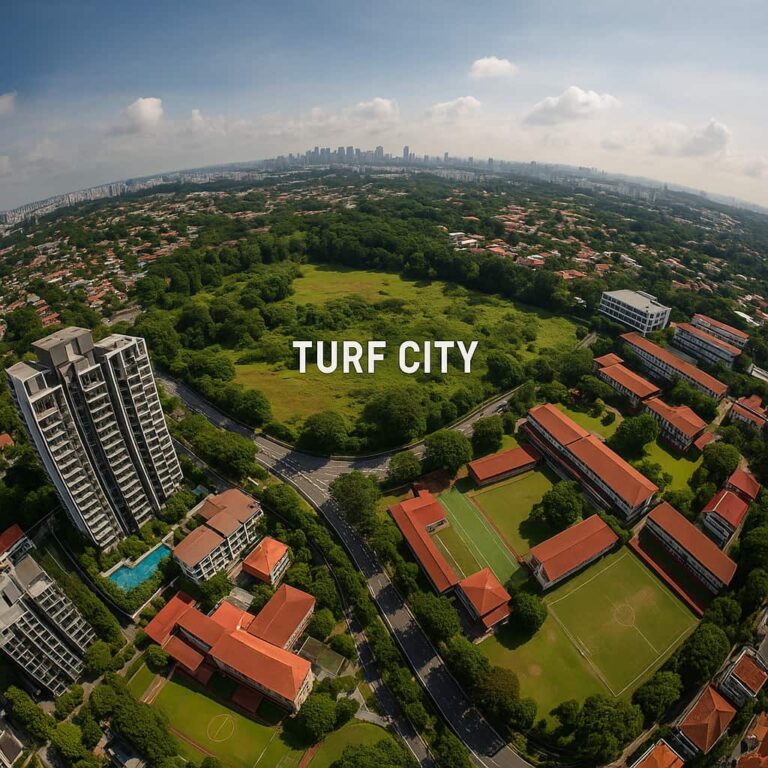
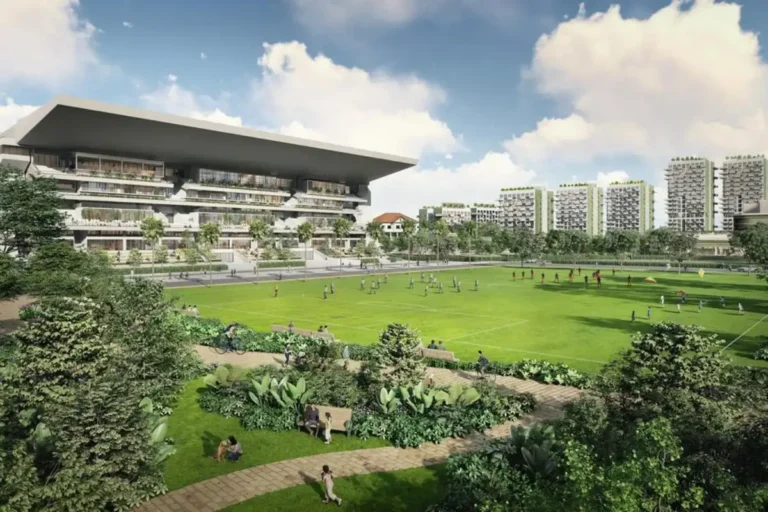
With the emergence of Turf City as a new residential district, understanding Bukit Timah’s historical price trends offers valuable insight into what buyers can expect moving forward.
📊 Bukit Timah: A Market Defined by Stability
Unlike newer towns that experience sharp volatility, Bukit Timah has historically been characterised by:
- Strong owner-occupier demand
- Limited new supply
- High-income buyer profiles
- Long-term holding behaviour
These factors contribute to price stability, even during market downturns.
📉 How Bukit Timah Performed Across Property Cycles
🔹 Pre-2013 Peak
Before cooling measures intensified, Bukit Timah saw strong capital appreciation driven by:
- Foreign demand
- Limited supply
- Prime district appeal
Prices reached new highs, especially for freehold properties.
🔹 2013–2017 Cooling Period
During the cooling measures era:
- Transaction volumes slowed
- Prices softened slightly
- Sellers held firm due to financial strength
Unlike mass-market areas, Bukit Timah did not experience drastic declines — a key sign of resilience.
🔹 2017–2022 Recovery Phase
As the market stabilised:
- Prices gradually recovered
- Demand returned, especially for larger units
- Prime districts regained attention
Bukit Timah once again proved its long-term value proposition.
🔹 2023–Present: Renewed Growth & Limited Supply
Recent years have seen:
- Strong demand for well-located homes
- Rising construction costs pushing new launch prices higher
- Continued scarcity of land in prime areas
This sets the stage for Turf City to enter the market at a time of structural supply constraint.
🏗️ Why Turf City Arrives at the Right Time
Turf City is not entering a weak market — it is emerging during a phase where:
- Bukit Timah has very limited new supply
- Buyers are actively seeking modern homes
- Infrastructure (like MRT expansion) is improving
👉 Redevelopment overview:
https://turfcitycondos.com/turf-city-redevelopment-2025-everything-you-need-to-know/
👉 Scarcity explained:
https://turfcitycondos.com/why-new-supply-in-bukit-timah-is-so-rare-and-why-turf-city-matters/
🚇 Infrastructure as a Price Catalyst
Historically, MRT developments have played a major role in price appreciation across Singapore.
With the upcoming Turf City MRT Station on the Cross Island Line, the area is expected to benefit from:
- Increased accessibility
- Stronger rental demand
- Broader buyer pool
👉 MRT impact:
https://turfcitycondos.com/%f0%9f%9a%87-how-the-cross-island-line-will-boost-property-prices-around-turf-city/
🧩 Lessons From Bukit Timah’s Price Trends
Looking at past data, several patterns emerge:
✅ Prices Rarely Drop Sharply
Strong owners = less forced selling
✅ Recovery Is Consistent
Prime districts bounce back faster
✅ Scarcity Drives Value
Limited supply supports long-term appreciation
✅ New Launches Set New Benchmarks
Each new project tends to reset pricing expectations
💡 What This Means for Turf City Buyers
Turf City sits at the intersection of:
- A historically resilient district
- A new supply cycle
- Infrastructure expansion
- Long-term urban planning
This creates a scenario where buyers are not just purchasing a unit — they are entering a proven market with a new growth phase.
👉 Investment angle:
https://turfcitycondos.com/why-turf-city-condos-will-be-singapores-next-investment-hotspot/
📢 Final Thoughts
Bukit Timah’s historical price trends tell a clear story:
this is a district built for long-term value, not short-term speculation.
Turf City represents the next chapter in that story — offering buyers a rare opportunity to enter a proven market at the beginning of a new development cycle.
For those who understand the past, the future becomes much clearer.
👉